




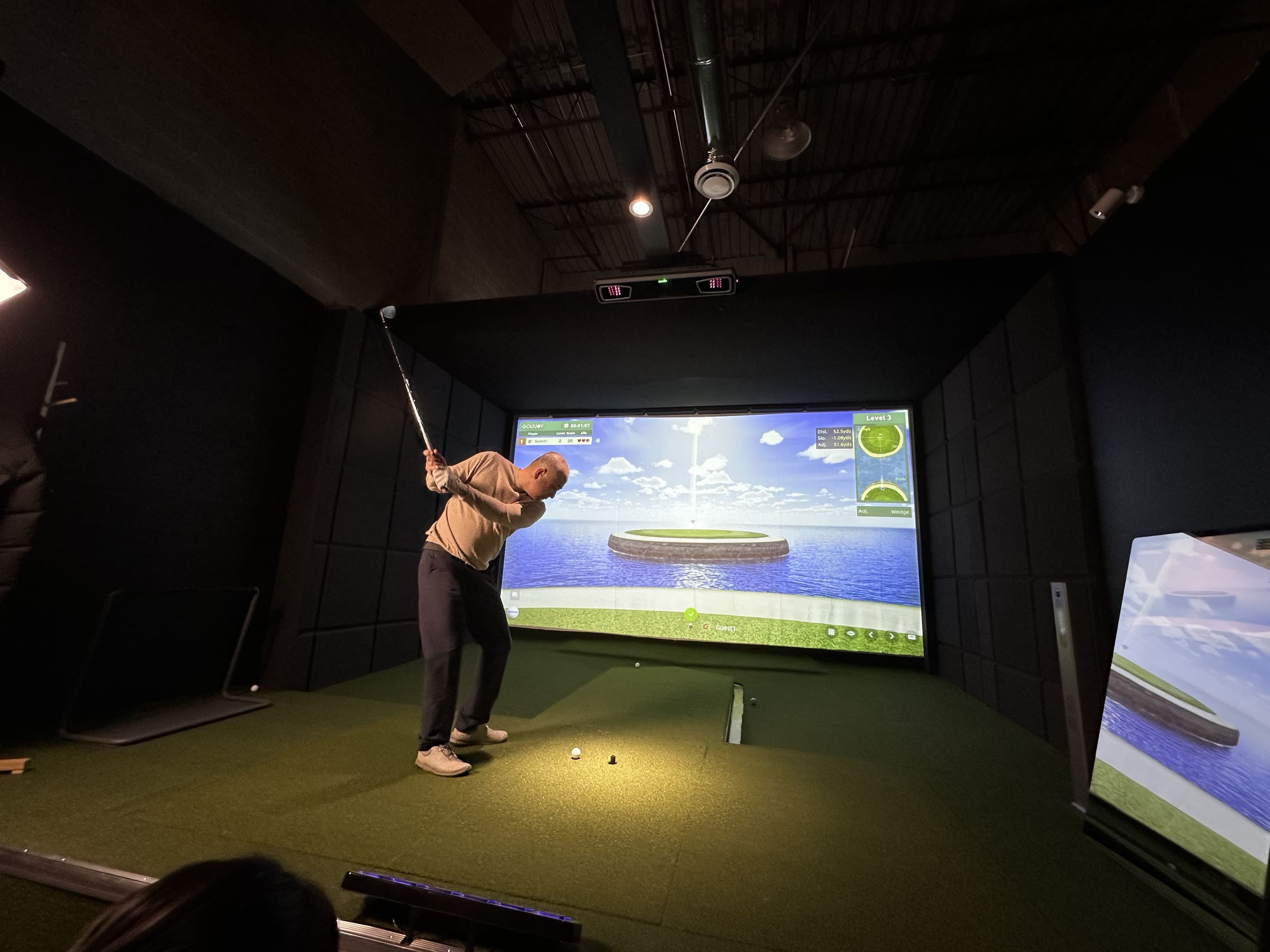

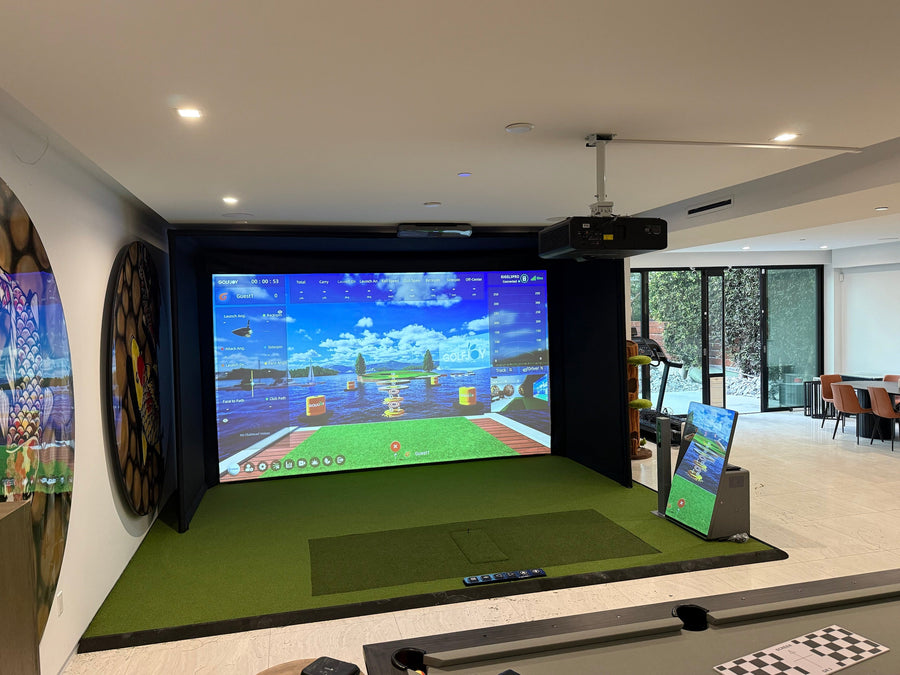
Yes — a garage, basement, or spare room can absolutely work for a golf simulator. Millions of US golfers are already doing it. The key is knowing the minimum dimensions your space needs to hit, and choosing equipment that's been designed for residential constraints rather than commercial showrooms.
Here's exactly what you need to know before you start measuring walls.

Every simulator setup comes down to three dimensions: width, depth, and height. All three matter. Getting one wrong wastes the other two.
Width is the most psychologically important dimension — more than most golfers expect. A space that feels "just wide enough" often causes you to subconsciously chorten your swing to avoid the walls, which defeats the whole purpose of practice.
Depth covers the full distance from the back wall (behind where you stand) to the front of the impact screen. This isn't just the screen's footprint — it includes your stance area and enough room to set up naturally.
Most garages and finished basements in the US run 8–10ft of ceiling clearance. Here's how that maps to simulator use:
If your ceiling is below 8ft, a full simulator is generally not the right call — you'll end up compensating your swing to avoid contact, which builds bad habits.
| Setup Type | Net Required Area | Recommended Required Area | Ceiling |
|---|---|---|---|
| Compact home (P8 Size 1) | ~136 sq ft | ~175 sq ft | 8.2ft min |
| Standard home (P8 Size 2) | ~163 sq ft | ~210 sq ft | 9.2ft recommended |
A standard two-car garage in the US runs roughly 400–500 sq ft. A single-car garage is typically 200–250 sq ft. Both can work — the single-car garage at the tighter end of the P8 Size 1 spec, the two-car garage with room to spare.

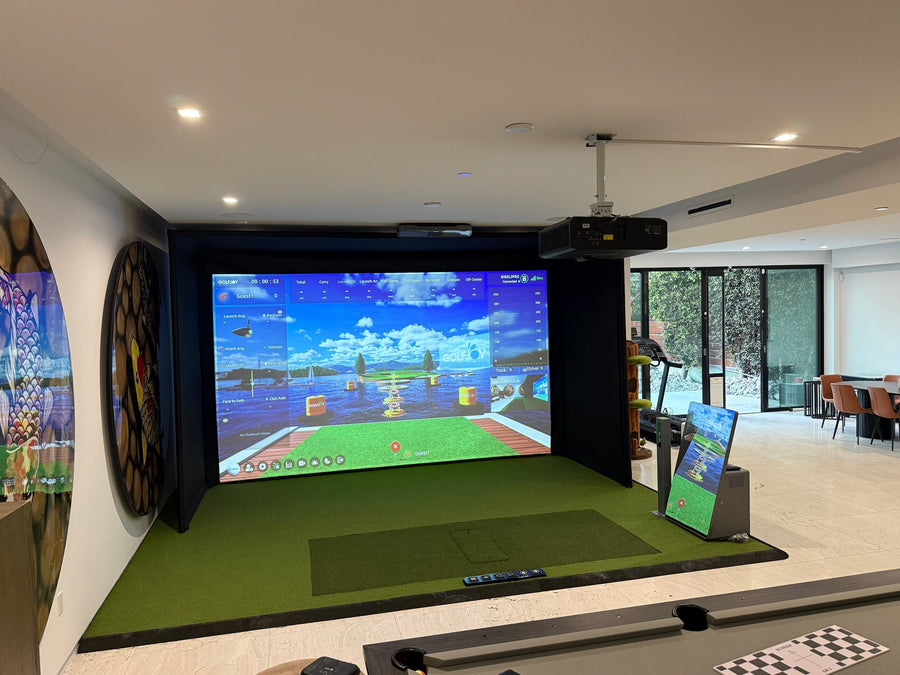
Both are designed specifically for residential installs. The complete kit — enclosure, impact screen rated for 30,000+ shots, hitting mat, projector, and launch monitor — assembles without tools in a few hours. No contractor. No renovation. Just follow the steps and swing.
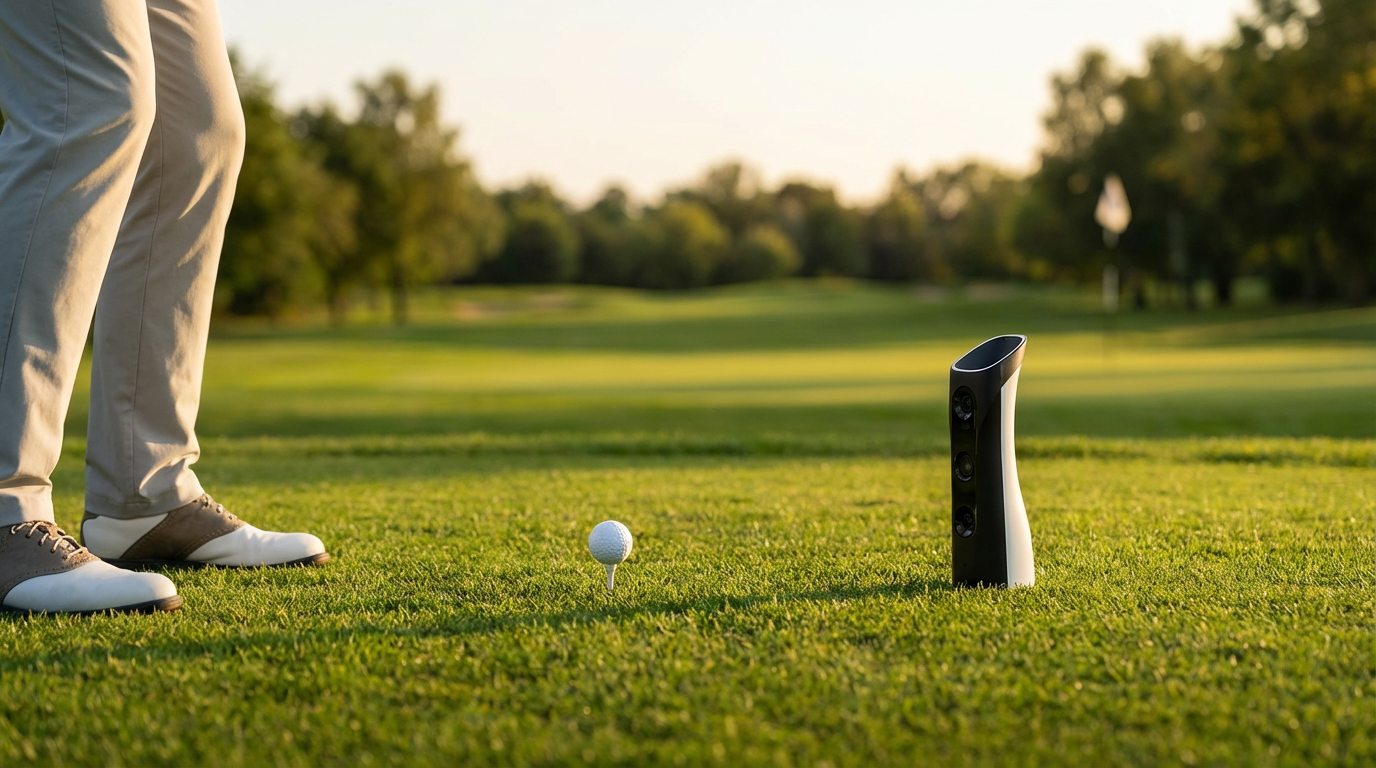
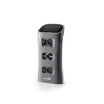
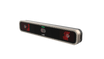
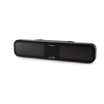
If you're not ready for a full enclosure build, a portable launch monitor turns any open space into a practice zone:
Both connect to GOLFJOY Software, GS Pro, E6 Connect, and Creative Golf. Every purchase includes a free 3-month software trial.
It'll work for irons and wedges at the minimum. If you want to swing a driver without any ceiling awareness, you really want 9ft+. At exactly 8ft, be honest about your swing style before committing.
Position your hitting area at the highest point of the slope. That's usually in the center — which is also the natural place to set up anyway. Measure at the point where you'd actually stand, not at the perimeter.
The P8's toolless frame means setup and breakdown are both quick. Some golfers store it folded and set it up when they want to use it. It's not a five-minute job, but it's doable.
If you clear those four checks, your garage or basement is a legitimate simulator candidate. The equipment exists to make it work — GOLFJOY's P8 was built specifically for this scenario.
Submit your information and our team will follow up with you.