





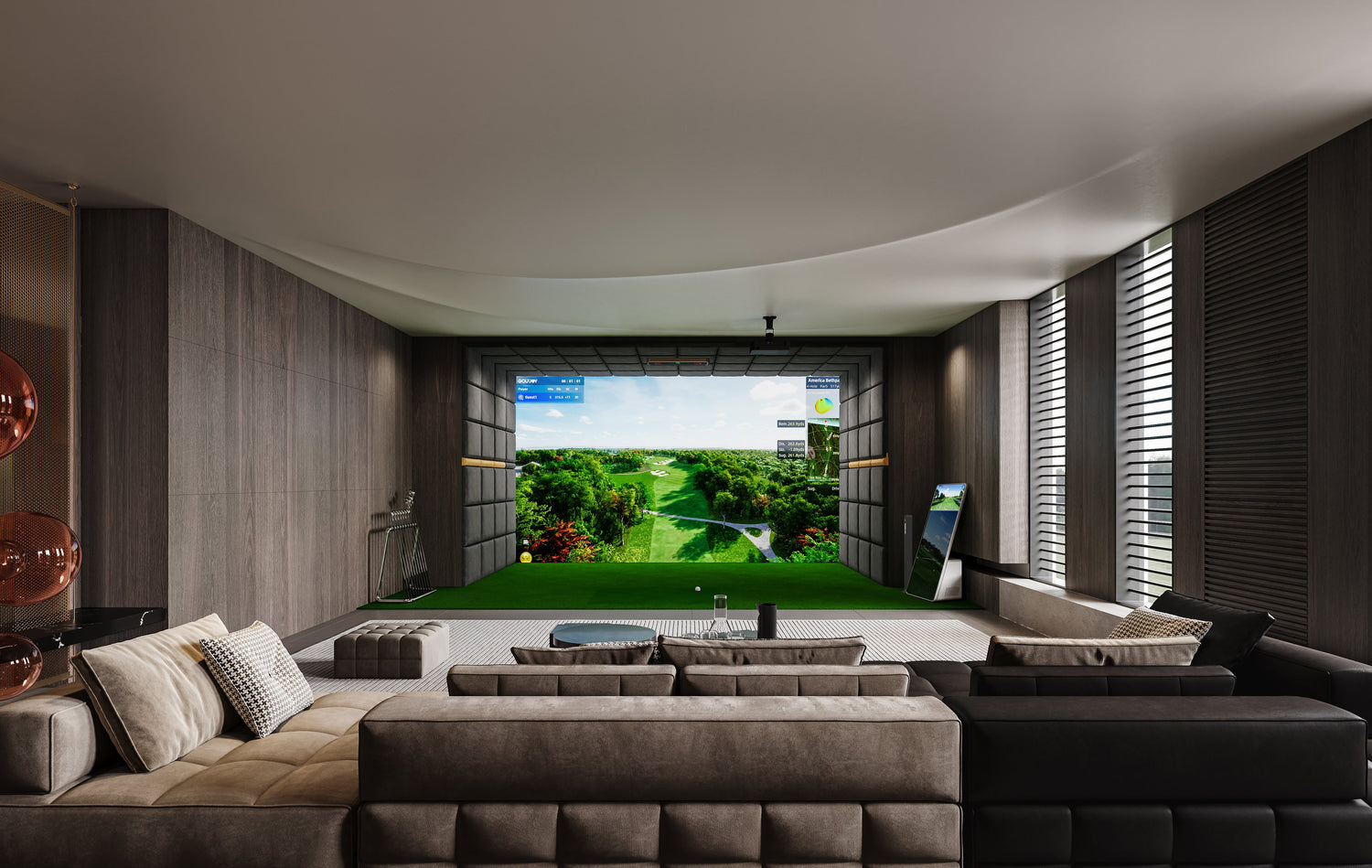
Golf simulator vs driving range is a common question among golfers looking to improve their practice routine. While outdoor ranges provide real ball flight and natural conditions, indoor golf simulators offer detailed performance data, repeatable practice environments, and year-round access.
An outdoor range shows the actual ball moving through real air and landing on a real surface. A simulator creates a controlled environment with immediate data, repeatable targets, virtual course situations, and year-round access.
The better choice depends on the goal of the session. A golfer working on visual ball flight may value the range, while a golfer testing carry gaps, launch conditions, or shot dispersion may benefit more from structured simulator feedback.
Data Feedback: What Can You Learn After Every Shot?
At a traditional driving range, feedback often comes from observation: start direction, curve, peak height, landing area, sound, and feel. This is valuable, but visual judgment can become difficult when targets are far away, range balls perform differently, or weather changes during the session.
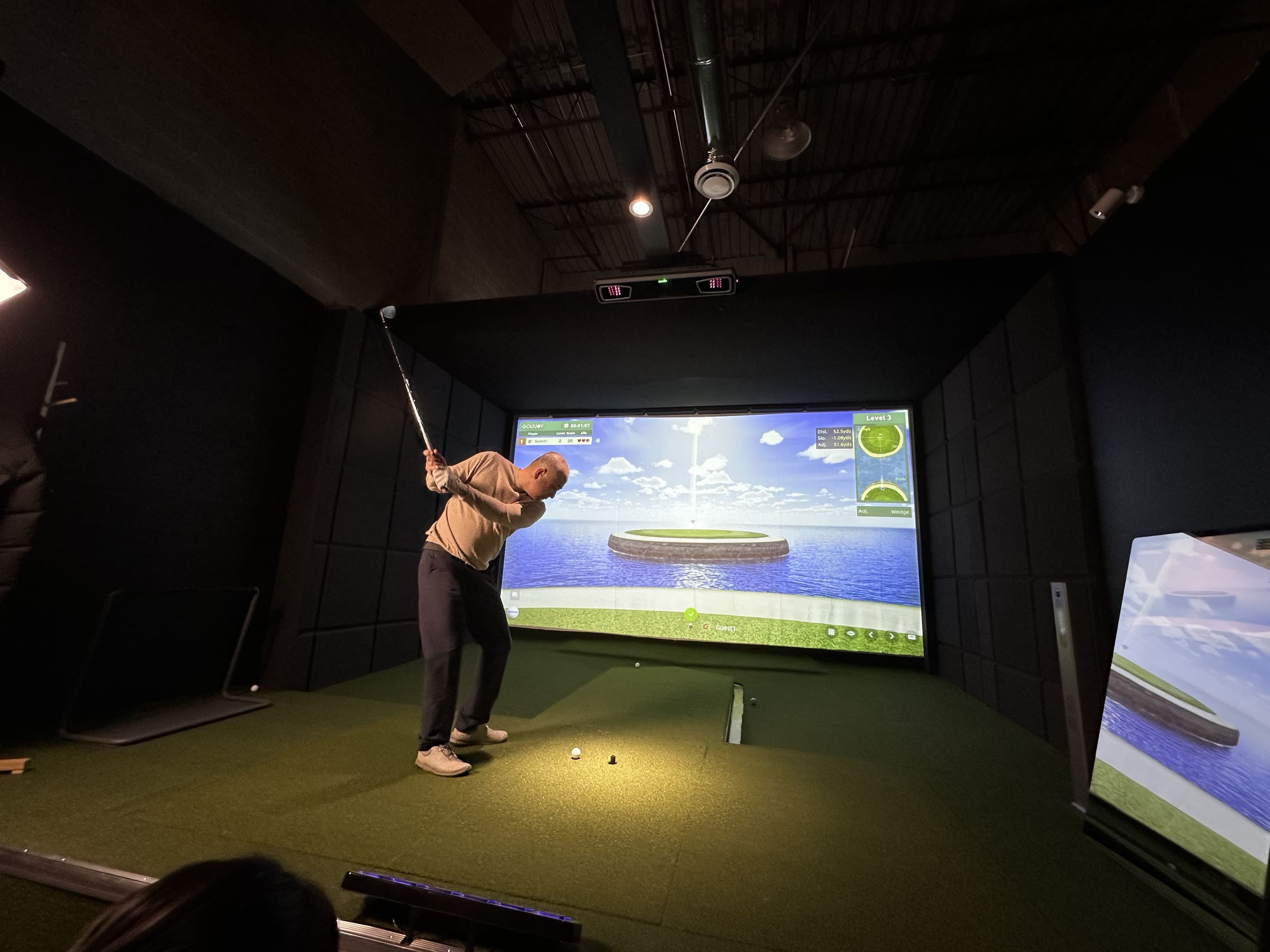
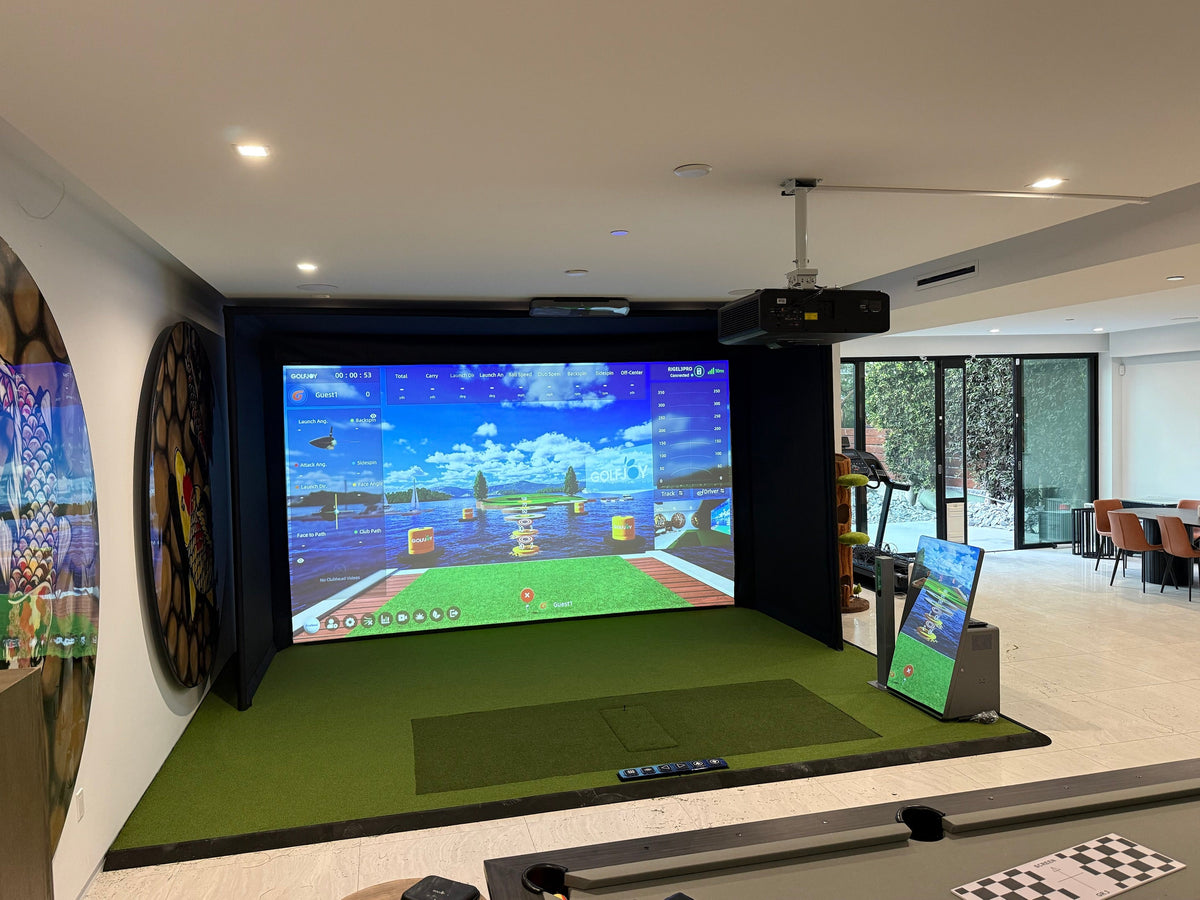
A commercial indoor golf simulator can present ball and club metrics immediately after each strike. Depending on the tracking system, golfers may review ball speed, launch angle, spin, carry distance, club speed, path, attack angle, and dispersion.
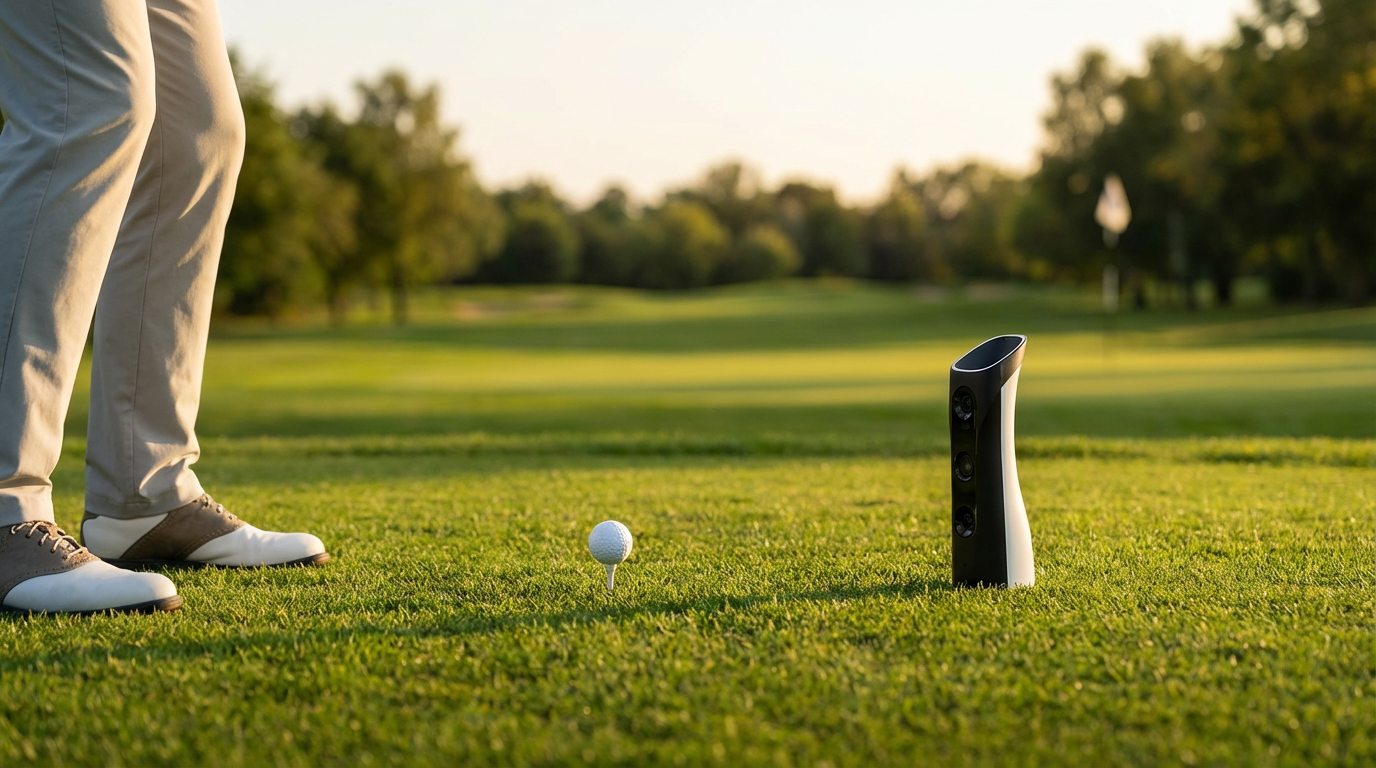
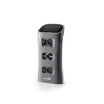
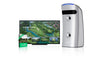
Modern launch monitor systems, such as GOLFJOY launch monitors, combine high-speed camera technology with detailed shot analysis to help players understand ball flight, club delivery, and consistency patterns.
The main advantage is not the number of metrics. It is the ability to test a specific change and see whether the result is repeated. A player can compare ten shots before and after an adjustment without changing target, weather, ball supply, or observation angle.
Real Ball Flight vs. Modeled Ball Flight
The outdoor range provides direct visual evidence of the complete shot. Golfers can see how wind affects curvature, how trajectory changes against the sky, and how the ball lands on natural terrain.
A simulator records the initial shot conditions and models the remaining flight. This creates a consistent comparison environment and allows the same shot to be evaluated on different virtual holes or target distances. The accuracy of simulated flight depends on the quality of the tracking technology, software algorithms, and system calibration.
A golf driving range simulator is particularly useful when the practice objective is controlled repetition. Instead of hitting toward one broad field, the player can select an exact carry target, fairway width, green location, or hazard and measure the result.
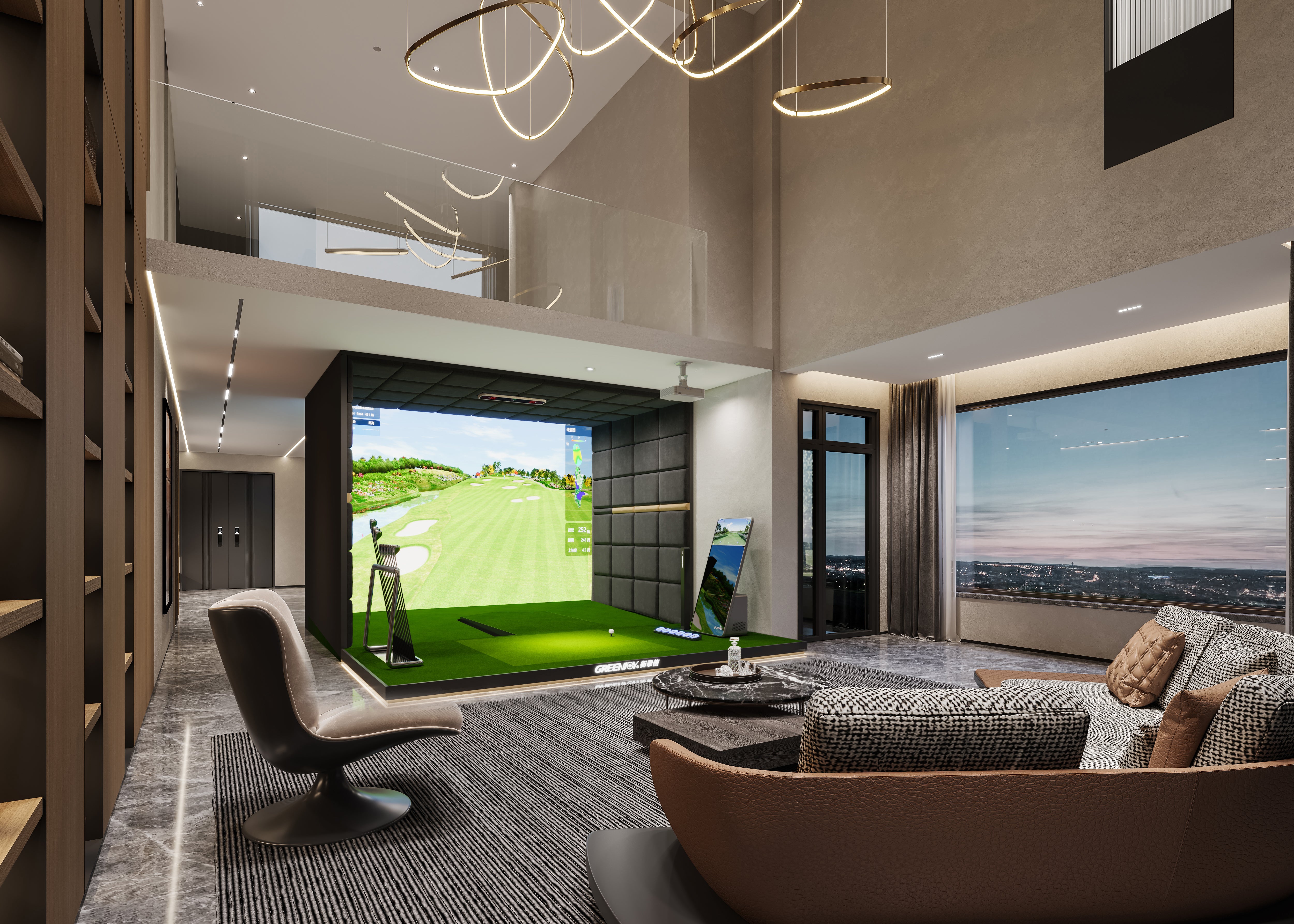
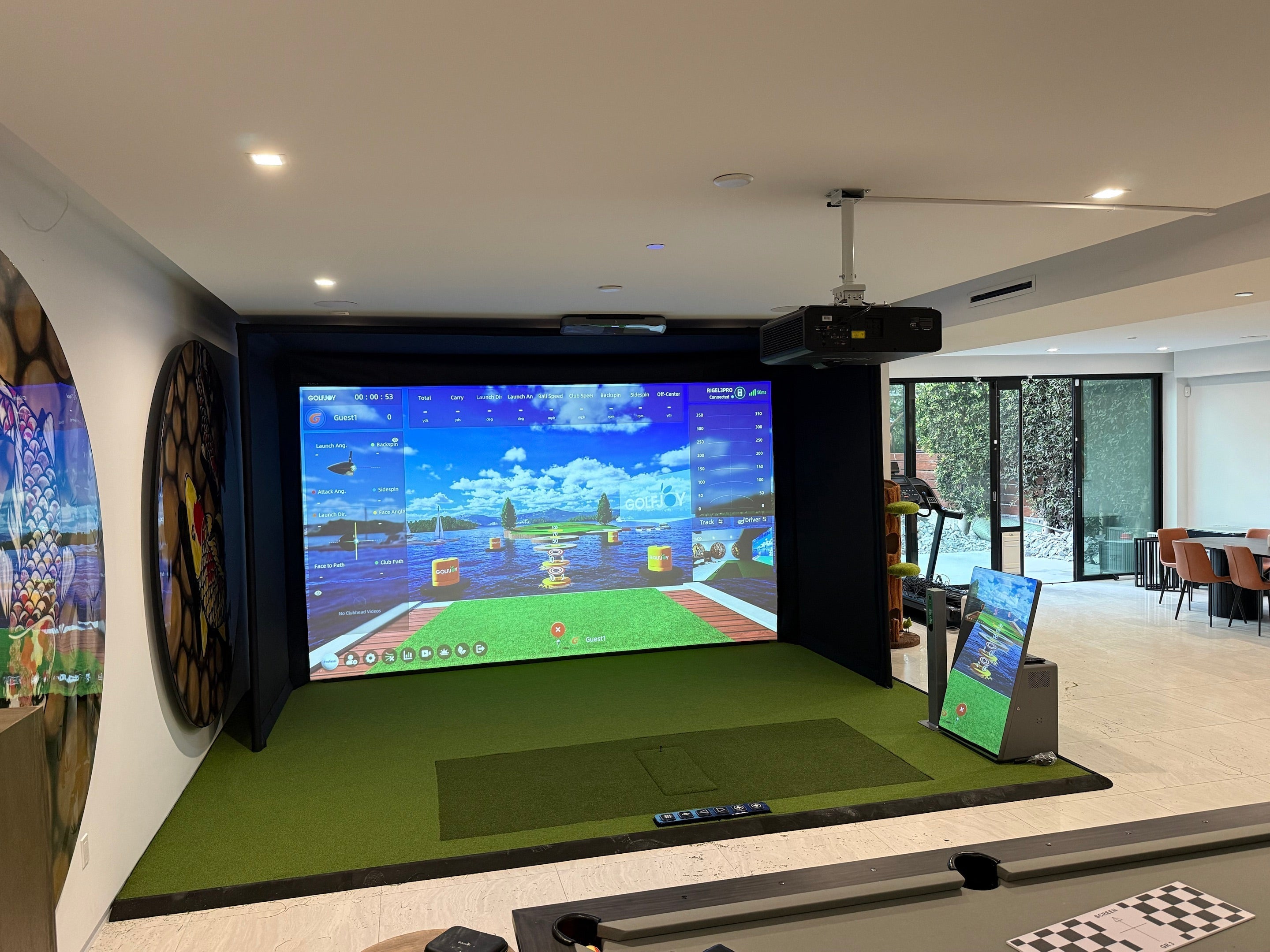
For golfers building a home practice space, a golf driving range simulator setup can provide many of the same training advantages as a professional practice facility while offering greater convenience.
For technical practice, modeled consistency is often useful. For learning to read wind and observe real landing behavior, the outdoor environment remains important.
Weather, Access, and Practice Frequency
Weather is the clearest difference between the two environments. Outdoor practice can be interrupted by rain, heat, cold, strong wind, darkness, or seasonal closure. These conditions may be useful when preparing for real play, but they make consistent training schedules harder to maintain.
Indoor practice allows the golfer to train at a planned time and repeat a test under similar conditions. This is useful for working professionals, junior programs, coaches, fitting studios, and regions with long winters or hot summers.
Golfers who want both environments can use an outdoor golf launch monitor at the range and bring the same data-driven process indoors. This reduces the need to choose one environment permanently.
Practice Cost: Session Fees vs. Long-Term Access
A driving range normally has a low entry cost. The golfer pays for balls, a time period, or a membership. There is no need to purchase a projector, computer, screen, tracking system, or dedicated room.
Simulator practice may require venue rental fees or an initial investment for home installation. However, frequent users may find value through unlimited practice access, structured training, and improved feedback quality.
|
Cost Question |
Driving Range |
Golf Simulator |
| Initial investment | Low for an individual session | Higher for ownership; hourly options available at venues |
| Recurring cost | Balls, travel, membership or session fees | Software, electricity, maintenance or venue fees |
| Travel time | Depends on range location | Low for a home system; depends on indoor venue |
| Weather cancellations | Possible | Minimal |
| Group use | Often priced by balls or bay | Can support shared bay time and virtual games |
The meaningful comparison is cost per useful practice session, not only the purchase price or bucket price. A low-cost session that does not match the training goal may provide less value than a focused session with measurable outcomes.
Which Environment Is Better for Different Practice Goals?
|
Practice Goal |
Recommended Environment |
Reason |
| Learn actual wind behavior | Outdoor Range | The ball travels through real conditions |
| Build reliable carry gaps | Simulator | Targets and conditions can remain consistent |
| Test launch and spin changes | Simulator | Immediate data supports controlled comparison |
| Develop visual shot-shape awareness | Outdoor range | The golfer sees the full real flight |
| Practice course strategy | Simulator | Virtual holes create changing targets and consequences |
| Prepare for poor weather | Outdoor range | Real wind and temperature create adaptation |
| Maintain winter practice frequency | Simulator | Access is not dependent on outdoor conditions |
Beginners may benefit from indoor feedback when learning basic distances and contact patterns, but they should still experience real turf, wind, and visual depth. Advanced players can use the simulator for controlled experiments and the range for validation.
Choosing an Indoor Golf Simulator for Structured Practice
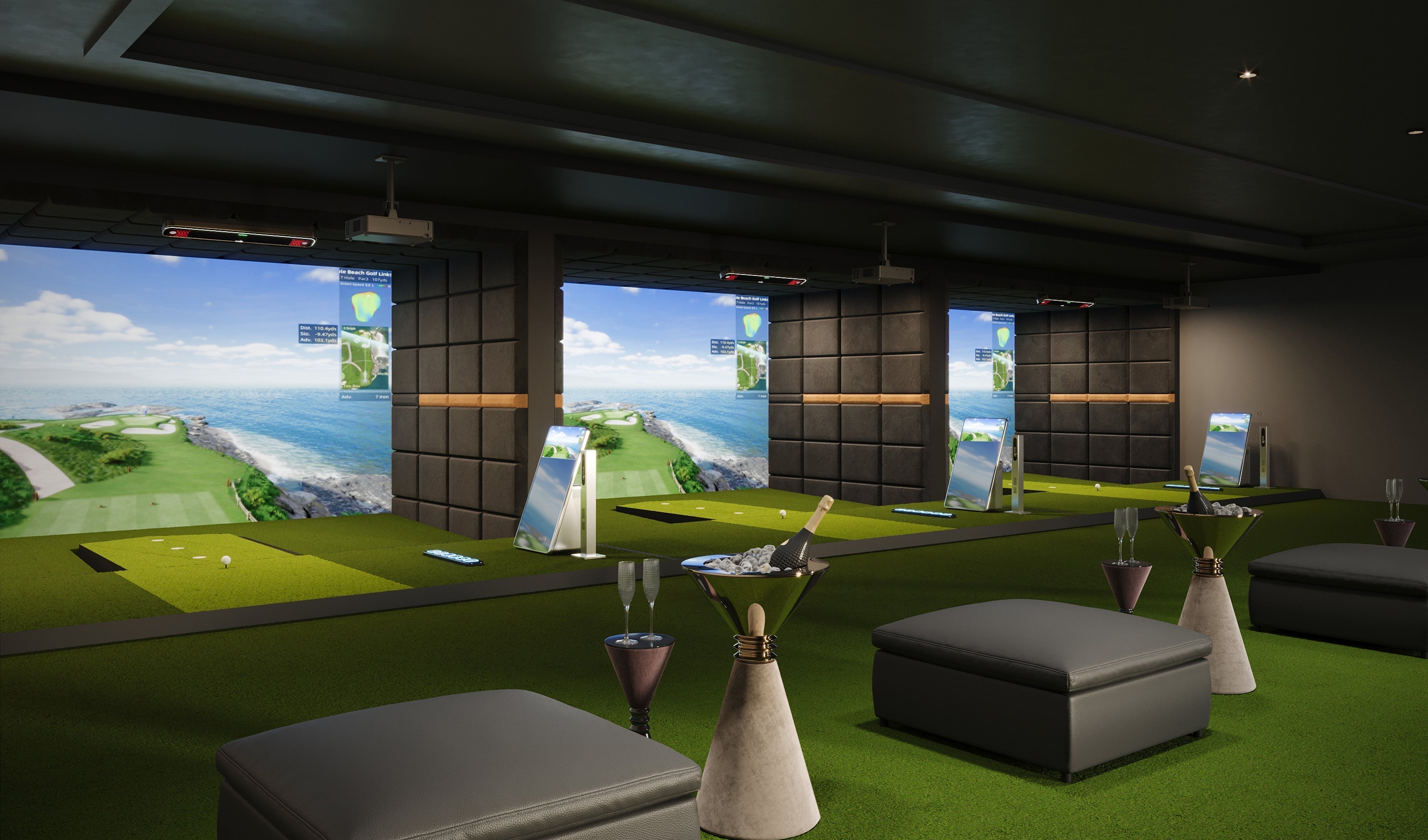
For golfers who want consistent practice access, an indoor golf simulator provides a controlled environment to analyze performance and repeat specific training scenarios.
GOLFJOY indoor golf simulator solutions combine launch monitor technology, simulation software, and flexible installation options for home users, coaches, and commercial facilities.
Software Changes Indoor Practice From Repetition to Decision-Making
Indoor practice becomes more valuable when it includes purposeful tasks rather than unlimited random shots.
Well-designed golf simulator software can support distance challenges, approach practice, virtual course play, multiplayer sessions, shot histories, and different environmental settings. With platforms such as GOLFJOY software, golfers can combine practice modes, course simulation, and shot analysis in one connected training environment.
A player can practice a 100-yard carry window, play repeated approach shots from difficult lies, or test whether a driver pattern is wide enough to create trouble on a virtual fairway. This makes each shot part of a decision rather than only a swing.
A Hybrid Weekly Practice Plan
For many golfers, the most effective choice is not simulator or range. It is a schedule that uses each environment for what it does best.
- Indoor golf simulator session: measure carry gaps, directional patterns, launch conditions, and shot consistency.
- Outdoor range session: confirm visual flight, turf interaction, and wind response.
- Simulator course session: apply the technical work to club selection and strategy.
- On-course round: test whether practice decisions transfer under real scoring pressure.
Keeping one or two consistent metrics across all sessions can make the environments easier to compare. For example, a player may track start direction and carry consistency indoors, then observe whether the same pattern appears outdoors.
Conclusion
A driving range offers real flight, real weather, and direct visual feedback. A golf simulator offers consistency, detailed data, virtual situations, and reliable access. For golfers who want measurable improvement without being limited by weather or location, a modern indoor golf simulator can become an effective addition to a complete training routine.
Choose the environment that answers the question you are working on that day. Use the simulator to measure and isolate variables, and use the outdoor range to validate ball flight under natural conditions. Together, they create a more complete practice system than either option alone.
FAQ
Is a golf simulator a complete replacement for a driving range?
Not for every golfer. Simulators are strong for data, repetition, and year-round access, while outdoor ranges provide real wind, turf, depth perception, and full visual flight.
Which option is better for beginners?
A simulator can make distances and patterns easier to understand, but beginners should also practice outdoors to develop target awareness and comfort in natural conditions.
Can range balls change the data?
Yes. Range-ball construction, wear, temperature, and limited-flight designs can affect speed, spin, and distance. Use the same type of ball when comparing sessions whenever possible.
Which environment is better for club fitting?
A controlled simulator environment is useful for repeatable measurement, while outdoor validation can confirm trajectory and turf interaction. Many fitting processes benefit from both.
What is the main difference between a golf simulator and a driving range?
The main difference is feedback. A driving range provides real ball flight and outdoor conditions, while a golf simulator provides controlled practice with measurable data such as distance, launch, and shot dispersion.
Can I use a golf simulator for serious golf improvement?
Yes. Many golfers use simulators for structured practice, distance control, swing analysis, and course strategy. The most effective approach combines simulator training with outdoor practice.

Leave a comment
All comments are moderated before being published.
This site is protected by hCaptcha and the hCaptcha Privacy Policy and Terms of Service apply.