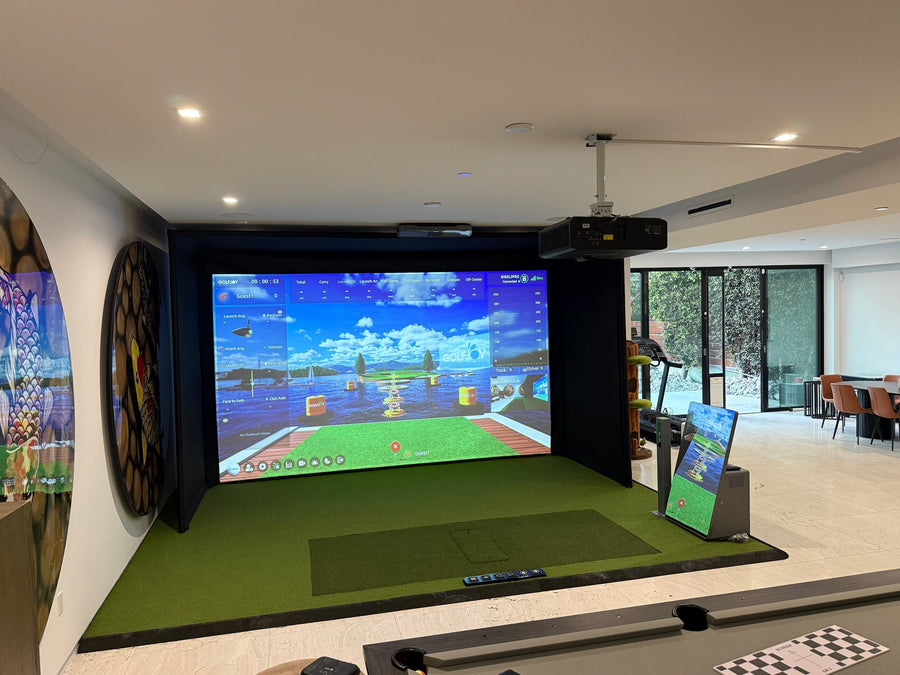






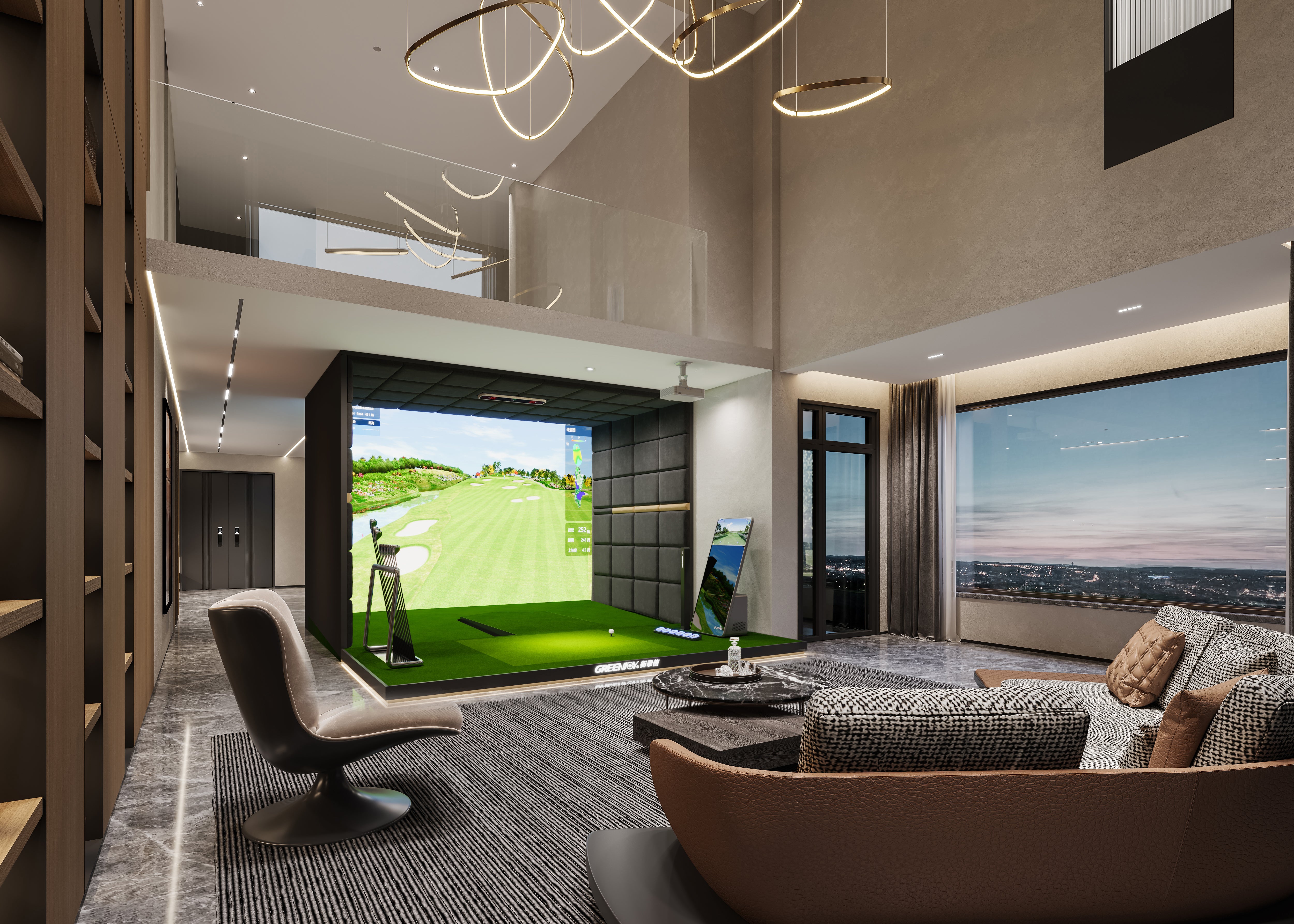
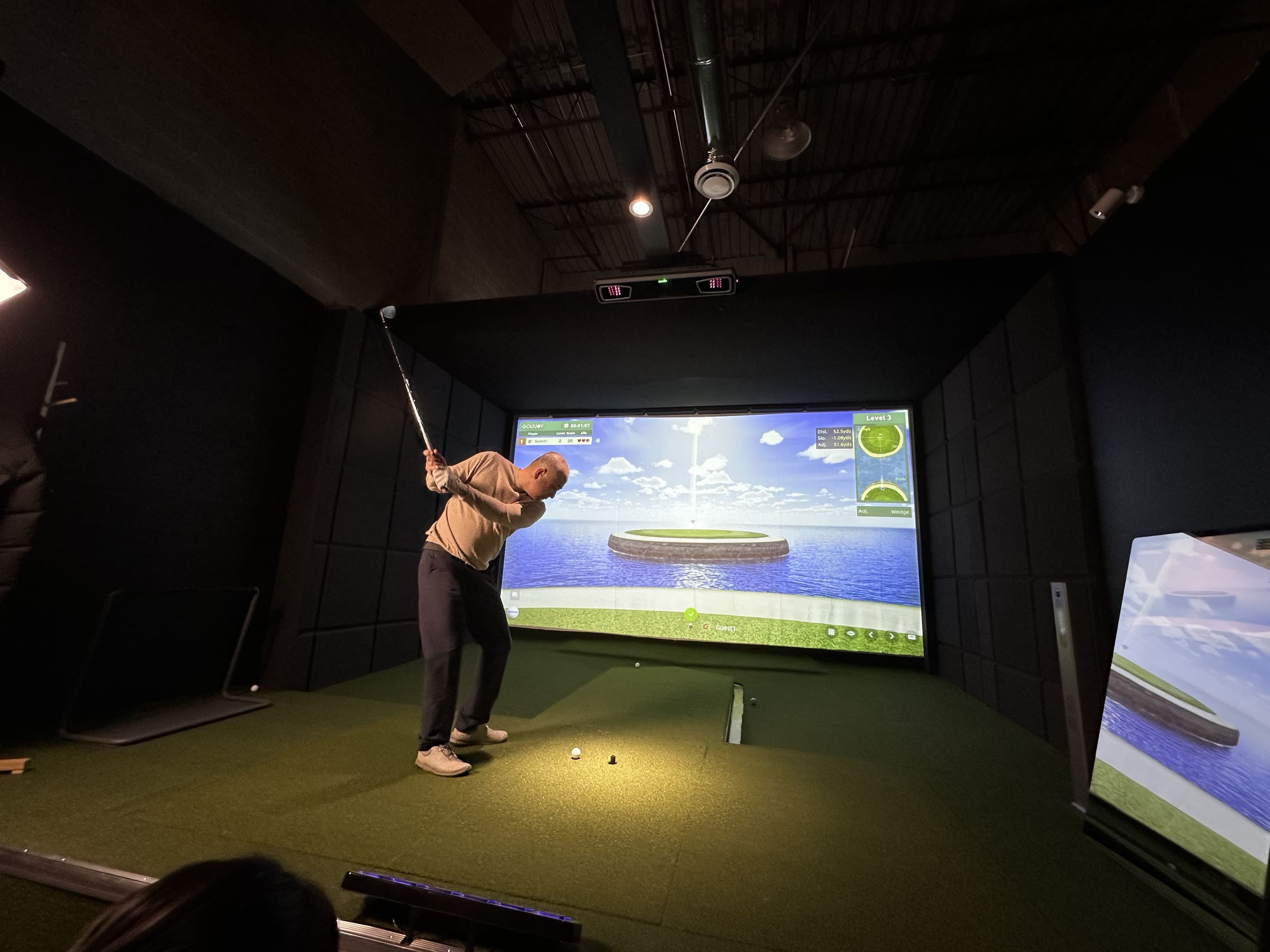
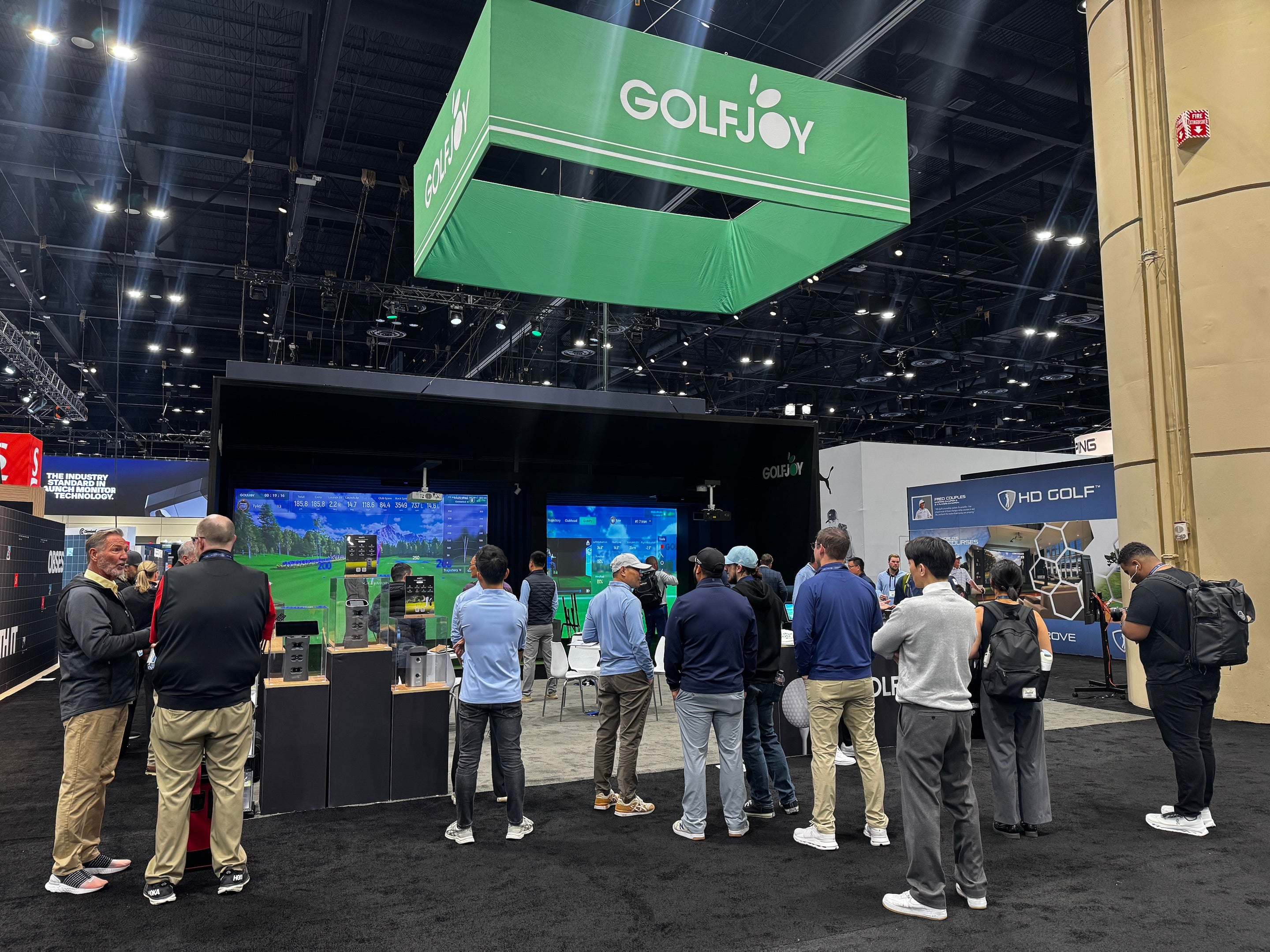


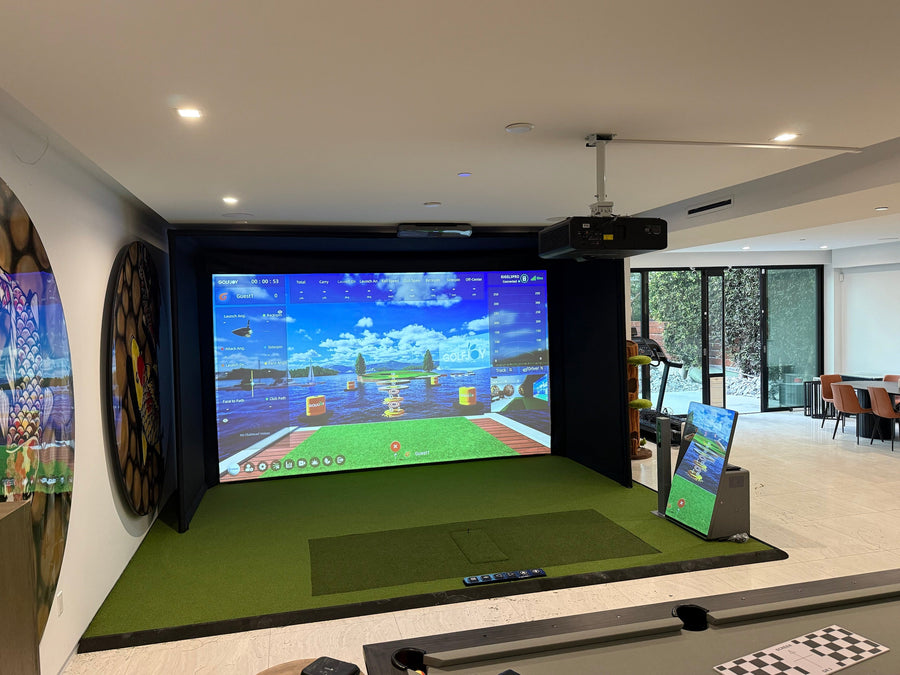
Commercial indoor golf is no longer limited to traditional golf clubs or dedicated teaching studios. Today, indoor golf facilities are appearing as membership clubs, social golf lounges, coaching centers, 24/7 self-service facilities, and hybrid entertainment businesses.
What makes this interesting from a business perspective is that the simulator itself is only part of the model. The real business is built around how customers use the space, how often they return, and what they are willing to pay for beyond a single round of golf.
That means there is no single commercial indoor golf simulator business model. A venue can generate revenue from hourly bay bookings, memberships, coaching, leagues, tournaments, private events, food and beverage, or a combination of several models.
This guide breaks down why the commercial indoor golf business model works, how different models generate revenue, and what operators should consider when choosing the right approach for their market.
A commercial indoor golf simulator business gives customers access to golf simulator bays in exchange for a fee, membership, lesson charge, event booking, or another form of paid access.
Unlike a home simulator, the system is being used as a revenue-generating business asset. That changes the priorities.
The operator is no longer thinking only about whether the simulator accurately tracks a golf shot. The business also needs to consider:
If you're still planning the simulator itself—including room requirements, tracking technology, software, and equipment—start with our Indoor Golf Simulator Guide before evaluating the business model.
Traditional golf is constrained by land, weather, daylight, tee-time availability, and the amount of time required to play a full round.
Indoor golf changes several of those constraints.
A commercial facility can operate in an urban or suburban commercial space, offer scheduled sessions throughout the day, and serve customers regardless of rain, snow, heat, or darkness.
More importantly, customers do not all need to use indoor golf in the same way.
One customer may book a bay for an hour of practice. Another may visit every week through a membership. A group may book several bays for a corporate event. A coach may use the same facility for lessons, while a league fills otherwise slower evening hours.
That flexibility is what makes commercial indoor golf interesting as a business model: the same simulator infrastructure can support multiple customer experiences and multiple revenue streams.
Before opening a facility, it helps to understand the major ways indoor golf businesses can be structured.
| Business Model | Primary Revenue | Typical Customer | Operational Focus |
|---|---|---|---|
| Hourly Bay Rental | Pay-per-session bookings | Casual golfers, groups, occasional players | Bay utilization and booking volume |
| Membership Club | Monthly or annual memberships | Frequent golfers | Retention and recurring use |
| 24/7 Indoor Golf | Memberships + self-service bookings | Convenience-driven golfers | Automation and low-staff operation |
| Coaching & Training Studio | Lessons, training programs, bay time | Improvement-focused golfers | Instruction and performance data |
| Golf Entertainment Venue | Bay rentals + food & beverage + events | Groups, social players, corporate customers | Experience and spend per visit |
| Hybrid Model | Multiple revenue streams | Mixed customer base | Balancing utilization, retention, and revenue |
The hourly rental model is one of the easiest commercial indoor golf concepts to understand.
Customers reserve a simulator bay for a defined period and pay for the session. A single booking may include one golfer practicing alone or a group playing together.
The business therefore depends heavily on bay utilization.
For example, a four-bay facility does not simply have four pieces of equipment—it has four blocks of inventory that can be sold repeatedly throughout the day.
Operators using this model should pay close attention to:
The model is straightforward, but revenue can fluctuate when demand is concentrated around evenings, weekends, or colder months.
Instead of relying entirely on individual bookings, some indoor golf facilities use monthly or annual memberships.
Members may receive a defined number of hours, discounted bookings, priority access, practice privileges, or other benefits depending on the venue.
The advantage for the business is the potential for more predictable recurring revenue.
The challenge is different: the operator now needs to keep members engaged over time.
A membership model works best when golfers have a reason to return regularly. That could include:
For this model, retention can matter just as much as new customer acquisition.
One of the more interesting developments in indoor golf is the growth of self-service and 24/7 facilities.
Instead of staffing the venue during every operating hour, customers can book online and access the facility during their reserved time using an automated entry system.
The business model can be attractive because it extends the number of hours the facility can generate revenue without requiring the same staffing level throughout the entire day.
But a 24/7 model shifts the operational challenge from staffing to automation.
The venue needs reliable processes for:
The simulator experience also needs to be intuitive enough that customers can begin a session without waiting for an employee to configure the system.
For this reason, equipment reliability and simple operating workflows become particularly important in an unattended indoor golf facility.
This model is already being put into practice with GOLFJOY technology in North America. Two unattended golf simulator venues are currently operating with GOLFJOY systems, showing how the model can work in real commercial environments. One example is Tempo Golf in Mississauga, one of the first GOLFJOY-powered unattended golf simulator venues in North America. [See how the Tempo Golf unattended venue works] to learn more about the setup and operating model. If you're exploring a similar concept for your own market, contact GOLFJOY to discuss the equipment, software, and simulator configuration for an unattended facility.
Not every commercial indoor golf facility needs to compete as an entertainment venue.
Some businesses are built around improvement.
A coaching studio can combine simulator bay access with professional instruction, swing analysis, club fitting, junior development, or structured training programs.
In this model, the simulator is not simply selling playing time. It supports a higher-value service.
Customers may pay for:
Because the service depends more heavily on performance analysis, launch monitor data, shot history, video tools, and training software can become more important than they are in a purely entertainment-focused venue.
Another model treats golf as part of a larger social experience.
Instead of selling only simulator time, the venue combines indoor golf with food, drinks, social seating, private parties, corporate events, or other entertainment.
In this model, the golf bay helps bring people into the venue—but it may not be the only source of revenue.
A group might reserve a bay for two hours while also purchasing food and beverages. A company may reserve several bays for a team event. A birthday party or league night may generate spending beyond the simulator booking itself.
This changes the key business question from:
“How much revenue does each simulator hour generate?”
to:
“How much total revenue does each customer visit generate?”
The customer experience, seating layout, group capacity, service speed, and event programming therefore become part of the commercial simulator strategy.
Many indoor golf businesses do not fit neatly into one category.
A facility might offer hourly bookings during the day, memberships for frequent golfers, lessons from local coaches, league play in the evenings, and corporate events on weekends.
This creates a hybrid model.
The advantage is diversification. If one revenue stream slows, another may help utilize the same simulator bays.
For example:
The challenge is operational complexity. Different customer groups may require different booking rules, session lengths, software modes, staffing levels, and pricing structures.
A hybrid venue therefore needs a clear operating system—not simply more services.
Commercial indoor golf is also evolving beyond the traditional simulator venue. GOLFJOY's City Golf concept is designed to bring more of the golf experience into urban environments, closer to where people live, work, and spend their free time. GOLFJOY has developed City Golf projects in Guangzhou and Hangzhou as part of this approach.
Rather than trying to recreate a traditional golf course within a large footprint, City Golf uses technology to make better use of urban space. Depending on the project, the experience can combine golf simulators and digital course technology with real-golf elements, creating an environment where players can practice, play, and experience different parts of the game without traveling to a traditional course.
At the center of the model is GOLFJOY's digital golf technology, including simulator systems, high-speed tracking, and software that recreates golf-course environments. The result is a different way to think about commercial golf: not simply as an indoor simulator room, but as a technology-enabled golf destination built for the city.
[Explore GOLFJOY's City Golf projects] to see how the concept is being developed in real-world urban environments.
Commercial indoor golf businesses can generate revenue from several sources.
| Revenue Stream | How It Works | Best Fit |
|---|---|---|
| Bay Rental | Customers pay by session or time | Most commercial facilities |
| Memberships | Recurring monthly or annual access | Practice clubs and 24/7 venues |
| Coaching | Lessons and training programs | Studios and academies |
| Leagues & Tournaments | Entry fees, recurring league participation, events | Community-driven venues |
| Private Events | Corporate events, parties, group bookings | Entertainment venues |
| Food & Beverage | Additional spend during the visit | Golf lounges and social concepts |
| Club Fitting | Professional fitting services | Performance-focused facilities |
Not every venue needs every revenue stream. Adding more services does not automatically make the business stronger.
The better approach is to identify the primary customer first, then build revenue streams around how that customer actually wants to use indoor golf.
One useful way to think about an indoor golf business is to treat every simulator bay as a limited amount of sellable time.
If one bay is available for 12 hours per day, the business has 12 available bay hours to monetize.
That makes bay utilization an important operating metric.
But utilization alone does not tell the full story.
A venue may have lower utilization but generate more revenue per customer through coaching, events, memberships, or food and beverage. Another venue may focus on high-volume hourly bookings with a simpler service model.
Operators should therefore watch metrics such as:
These numbers reveal more about the health of the business than the number of simulator bays alone.
The business model can change significantly depending on bay count.
A smaller facility can work well for coaching, private practice, appointments, or a membership concept with controlled access.
The lower bay count simplifies operations, but capacity is limited. Every unavailable hour represents a larger percentage of total inventory.
A multi-bay venue can serve more customers simultaneously and creates more opportunities for leagues, events, group play, and memberships.
However, additional bays also increase requirements for space, computers, projectors, networking, maintenance, customer circulation, and support.
More bays create more revenue capacity—but only when demand exists to use them.
That is why bay count should be based on expected customer demand and operating model rather than simply filling all available floor space.
Simulator technology affects more than shot accuracy. It can influence how efficiently the venue operates.
Commercial operators should consider how the complete system supports:
For fixed commercial bays, overhead tracking can help keep hardware away from customer foot traffic and reduce the need to reposition a floor-based launch monitor between players.
Software also becomes part of the business model. Practice modes can support serious golfers and coaching, while virtual courses, multiplayer formats, games, leagues, and online competitions can create reasons for customers to return.
GOLFJOY Software has already been used to support organized online golf competitions, demonstrating how simulator software can extend the experience beyond individual practice or a single venue.
The simulator is only one part of the startup budget.
A commercial project may also require:
Because these costs vary significantly by venue size, location, bay count, and business model, they should be evaluated separately from the revenue model.
For a more detailed breakdown, see our GOLFJOY Commercial Indoor Golf Simulator Prices & Startup Costs guide.
There is no universal model that works for every market.
A useful starting point is to ask five questions:
The answers should shape the simulator configuration—not the other way around.
GOLFJOY provides commercial golf simulator solutions for different indoor golf environments, including coaching studios, golf clubs, academies, entertainment venues, multi-bay facilities, and other indoor golf businesses.
Rather than treating every commercial project as the same installation, the system can be planned around the venue's intended use, available space, customer flow, and number of bays.
GOLFJOY's commercial ecosystem includes overhead launch monitors, simulator software, complete simulator configurations, training functions, virtual course play, multiplayer experiences, and competitive formats.
For operators, the objective is not simply to install golf technology. It is to build a system that supports the way customers will actually use the business.
A commercial indoor golf simulator can support several business models, but the technology alone does not determine whether the business succeeds.
Location, local demand, pricing, customer acquisition, bay utilization, operating costs, customer retention, and management all matter.
The opportunity comes from flexibility.
The same indoor golf infrastructure can support practice in the morning, coaching during the day, memberships after work, leagues in the evening, and group events on weekends.
That makes commercial indoor golf less like a single-purpose attraction and more like a platform around which different golf businesses can be built.
The strongest concept is therefore not necessarily the one with the most bays or the most services. It is the one where the customer, revenue model, operating model, and simulator technology all support one another.
Common revenue streams include hourly bay rentals, memberships, coaching, leagues, tournaments, corporate events, private bookings, club fitting, and food and beverage. Many facilities combine several revenue streams rather than relying on one.
Neither is automatically better. Hourly bookings can work well for casual and group customers, while memberships can create more predictable recurring revenue from frequent golfers. Some venues use both.
Yes. Some facilities use online booking, automated access, self-service simulator workflows, and remote support to operate with limited staffing. However, security, customer instructions, equipment reliability, and emergency procedures need to be planned carefully.
Bay count should reflect local demand, available space, expected booking volume, customer type, and budget. More bays increase potential capacity but also increase buildout, equipment, maintenance, and operating requirements.
The best model depends on the target customer. Coaching studios may focus on lessons and practice, social venues may combine bay rentals with events and food and beverage, while frequent-player facilities may rely more heavily on memberships. Hybrid models can combine several approaches.
No. Commercial simulators can also be added to existing golf clubs, hotels, resorts, training academies, fitness facilities, entertainment venues, and other businesses as an additional service or customer experience.
Define the target customer, revenue model, expected usage, bay count, room dimensions, operating hours, staffing model, and budget first. Then select simulator hardware and software that support those requirements.
Submit your information and our team will follow up with you.