








Every golfer has experienced a shot that feels solid at impact but immediately starts left or right of the intended target. The problem may not be swing speed or power. It may begin with the ball’s launch direction.
In golf, launch direction describes the initial horizontal angle at which the ball starts relative to the target line. It shows whether the shot begins left, right, or directly toward the target before spin causes the ball to curve.
For golfers working on accuracy and consistency, launch direction is one of the most useful launch monitor metrics to understand. It helps separate a start-line problem from a curvature problem, making practice more focused and measurable.
Launch direction measures how far left or right the golf ball starts immediately after impact. Depending on the launch monitor’s display convention, a positive value may indicate that the ball starts right of the target line, while a negative value may indicate that it starts left.
Launch direction is influenced primarily by the clubface orientation at impact. Club path also contributes to the relationship between the face, the target line, and the resulting ball flight, particularly when evaluating why a shot starts in one direction and then curves in another.
Launch direction should not be confused with shot curvature. Launch direction describes where the ball begins, while curvature develops after launch as spin influences the remaining flight.
Even a small directional difference can become significant as the ball travels farther. A shot that starts only a few degrees away from the target line may miss a fairway or finish on the wrong side of a green.

Golfers sometimes describe a miss only by its final shape, such as a fade, slice, pull, or hook. However, two shots with similar curvature may begin on completely different start lines.
For example, a shot may appear to fade too far right because it started right of the target before curving. Another shot may start left and curve back toward the target. Understanding launch direction helps distinguish these patterns.
Tracking launch direction can help golfers:
Professional players and coaches pay close attention to start lines because directional control begins immediately after impact. For recreational golfers, understanding launch direction can make practice more purposeful by replacing guesswork with measurable feedback.
| Metric | What It Describes | Main Practice Question |
|---|---|---|
| Launch Direction | The initial horizontal direction of the ball relative to the target line | Did the ball begin left, right, or on target? |
| Shot Curvature | The left-to-right or right-to-left movement that develops during flight | How did spin influence the ball after launch? |
| Final Direction | Where the shot finishes relative to the intended target | Did the complete shot pattern produce a playable result? |
Modern launch monitor technology makes launch direction easier to measure, compare, and track across a complete practice session. Instead of relying only on visual judgment, golfers can review the start direction of each shot in degrees.
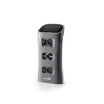
GOLFJOY portable launch monitors, including the Spica 3, and overhead systems such as the Rigel 3 Overhead Launch Monitor provide launch-direction feedback together with other ball and club performance data.
The Spica 3 uses a triple high-speed camera system to capture ball and club movement around impact. Reviewing launch direction alongside club path, launch angle, ball speed, and shot shape helps golfers understand whether a directional miss begins at impact or develops later in flight.
When connected with GOLFJOY Software, golfers can evaluate start-line control through target practice, shot analysis, and virtual course scenarios. This makes it possible to test the same adjustment over multiple shots under consistent conditions.
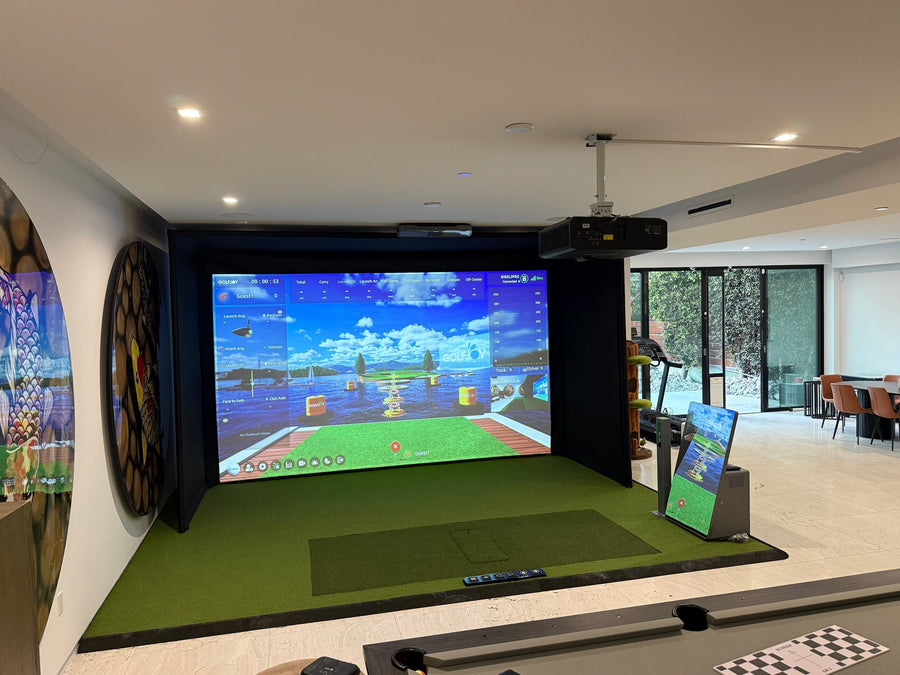
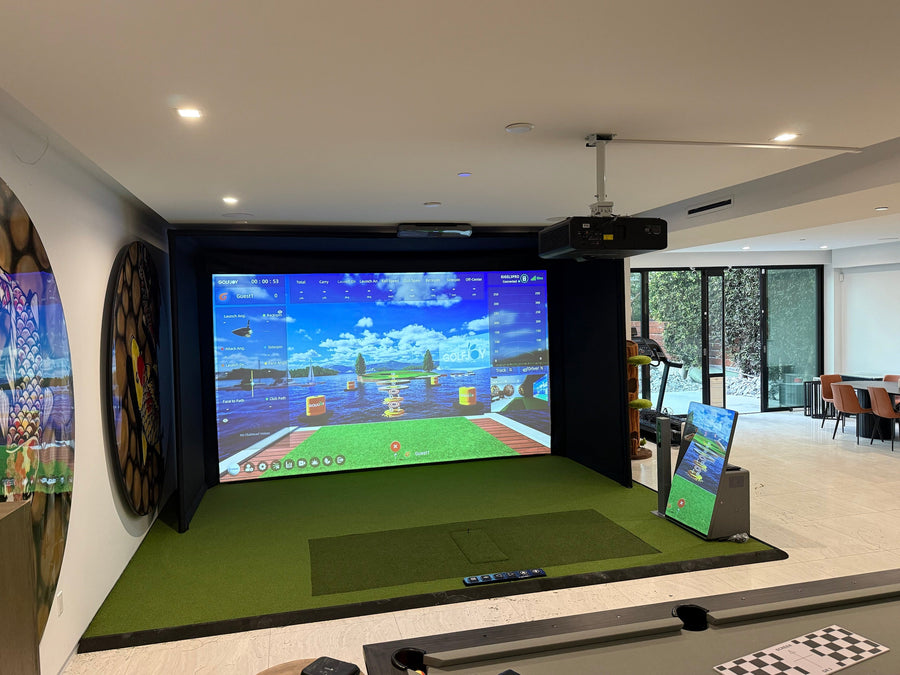
For golfers who want to practice directional control without being limited by weather or driving-range availability, a GOLFJOY home golf simulator provides repeatable targets, immediate launch data, and structured indoor practice in one environment.
For most full shots, the clubface angle at impact has a major influence on where the golf ball initially starts. A face that is open or closed relative to the intended target can move the launch direction right or left.
Club path remains important because the relationship between the face and path influences spin axis and curvature. This means launch direction should not be evaluated by itself.
A useful review may include:
Looking at these measurements together provides more useful information than trying to correct a shot based on launch direction alone.
Consider a golfer whose iron shots regularly finish to the right. The player may initially assume that excessive curvature is the only problem.
Launch monitor data may show that the ball already starts several degrees right of the target before fading farther right. In that case, the golfer should not evaluate curvature alone. Setup alignment, clubface orientation, club path, and face-to-path relationship should all be reviewed.
After making one controlled adjustment, the golfer can compare a new group of shots with the original baseline. The goal is not to produce one perfect result, but to create a tighter and more repeatable launch-direction pattern.
This type of structured comparison is more reliable than changing the swing after every individual miss.
Improving launch direction requires a repeatable process of measuring, evaluating, and adjusting.
Establish a baseline: hit a group of five to ten shots toward the same target before making a change.
Measure the start line: use a launch monitor that displays launch direction in degrees.
Check physical alignment: confirm that the clubface, feet, hips, and shoulders are aligned appropriately for the intended shot.
Review clubface and path together: avoid assuming that every directional miss comes from only one swing variable.
Test one adjustment at a time: changing grip, alignment, ball position, and swing intention simultaneously makes the results difficult to interpret.
Compare shot groups: review averages and dispersion patterns instead of focusing only on the best or worst shot.
Practice in consistent conditions: use indoor targets or a simulator environment when you want to isolate changes without weather variation.
Select one mid-iron and create a target gate around the intended start line. Begin with a wider gate, then reduce its width as your shot pattern becomes more consistent.
This drill helps golfers determine whether an adjustment improves the complete pattern or simply produces one successful shot.
Launch direction may be measured in only a few degrees, but it can have a meaningful effect on whether a shot begins toward the fairway, green, or trouble.
For golfers who are serious about improvement, tracking launch direction with a GOLFJOY launch monitor turns an often-invisible part of impact into clear, measurable feedback.
Review launch direction together with clubface, club path, curvature, and dispersion. This provides a more complete understanding of why shots miss and helps golfers make controlled adjustments instead of relying on guesswork.
Golfers building a dedicated practice space can also explore GOLFJOY indoor golf simulator solutions for data-driven training, virtual course play, and consistent year-round practice.
Launch direction is the initial horizontal angle at which the golf ball starts relative to the target line. It shows whether the ball begins left, right, or directly toward the intended target.
For most full golf shots, clubface orientation at impact has a major influence on the initial start direction. Club path and the face-to-path relationship also help explain the resulting curvature and complete ball-flight pattern.
No. Launch direction describes where the ball initially starts. Shot curvature describes how the ball moves left or right later in the flight because of spin.
There is no single ideal number for every shot because the intended start line depends on the target and desired shot shape. A useful goal is to create a launch-direction pattern that is consistent with the player’s intended target and curvature.
Yes. A launch monitor allows golfers to measure launch direction across multiple shots and compare it with club path, shot curvature, and dispersion. This makes it easier to evaluate whether a swing or setup adjustment produces a repeatable improvement.
Yes. An indoor golf simulator provides repeatable targets and consistent conditions, making it useful for start-line drills, directional testing, and shot-pattern analysis without weather-related changes.
Submit your information and our team will follow up with you.