





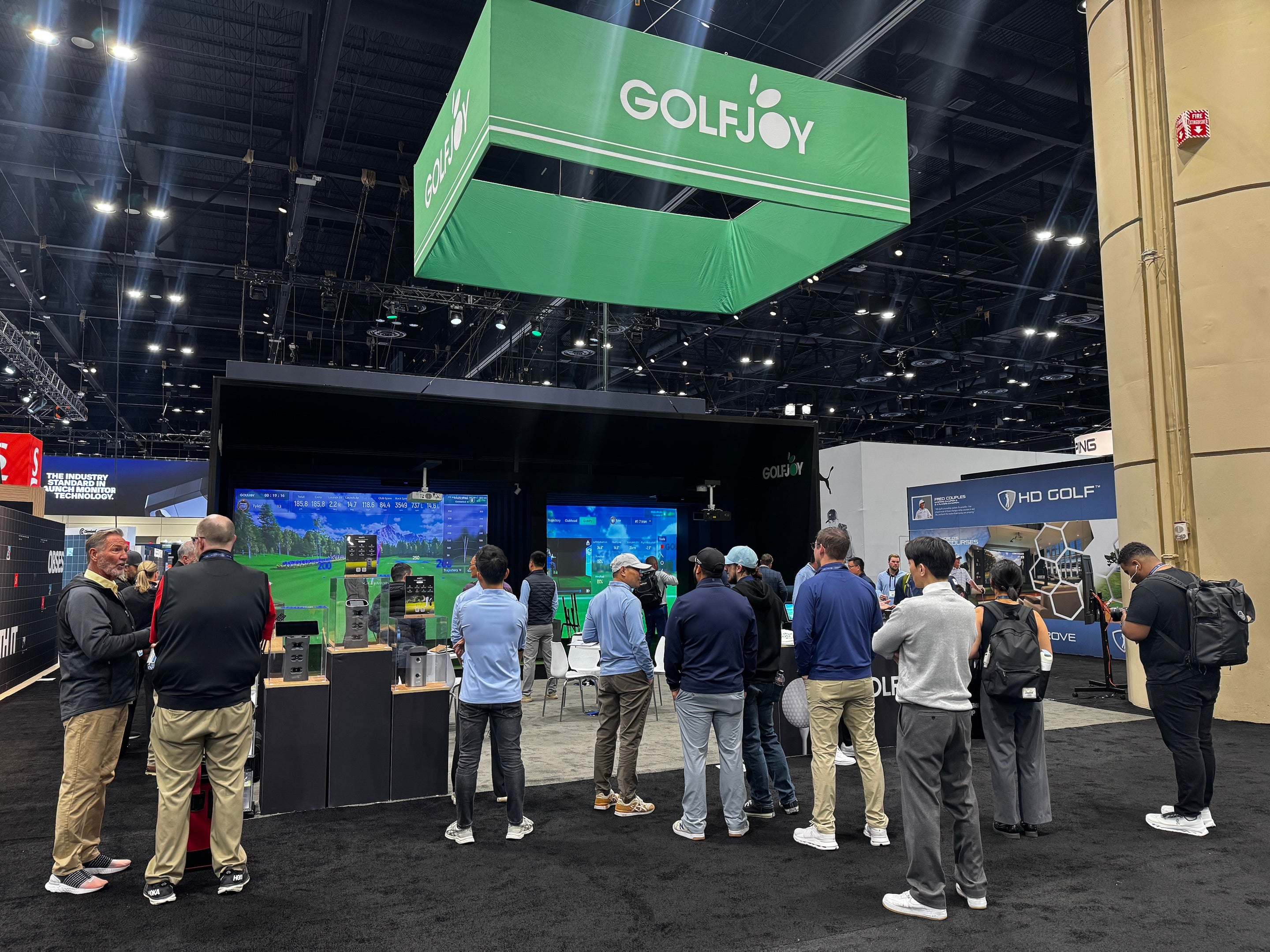


When most people ask “how much does a golf simulator cost,” they’re really asking two things:
what goes into the investment — and whether it’s worth it.
This guide answers both, breaking down simulator setups by type, components, and long-term value.
Every golf simulator setup is defined by three key variables:
1. Launch Monitor Technology
The most important factor. Performance, accuracy, and data depth all come from the launch monitor — from entry-level solutions to professional-grade multi-camera systems.
2. Physical Setup
Includes the impact screen, enclosure, hitting mat, and projector. While less variable, build quality directly impacts durability and user experience.
3. Software Ecosystem
Simulator software powers course play, practice modes, and data visualization. Ongoing updates and compatibility are key factors in long-term value.

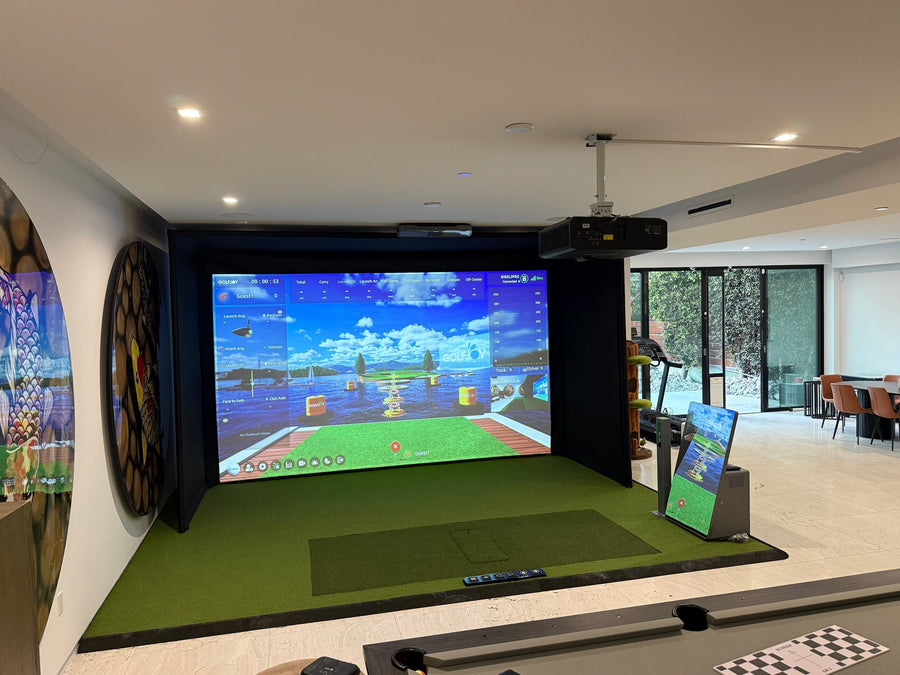
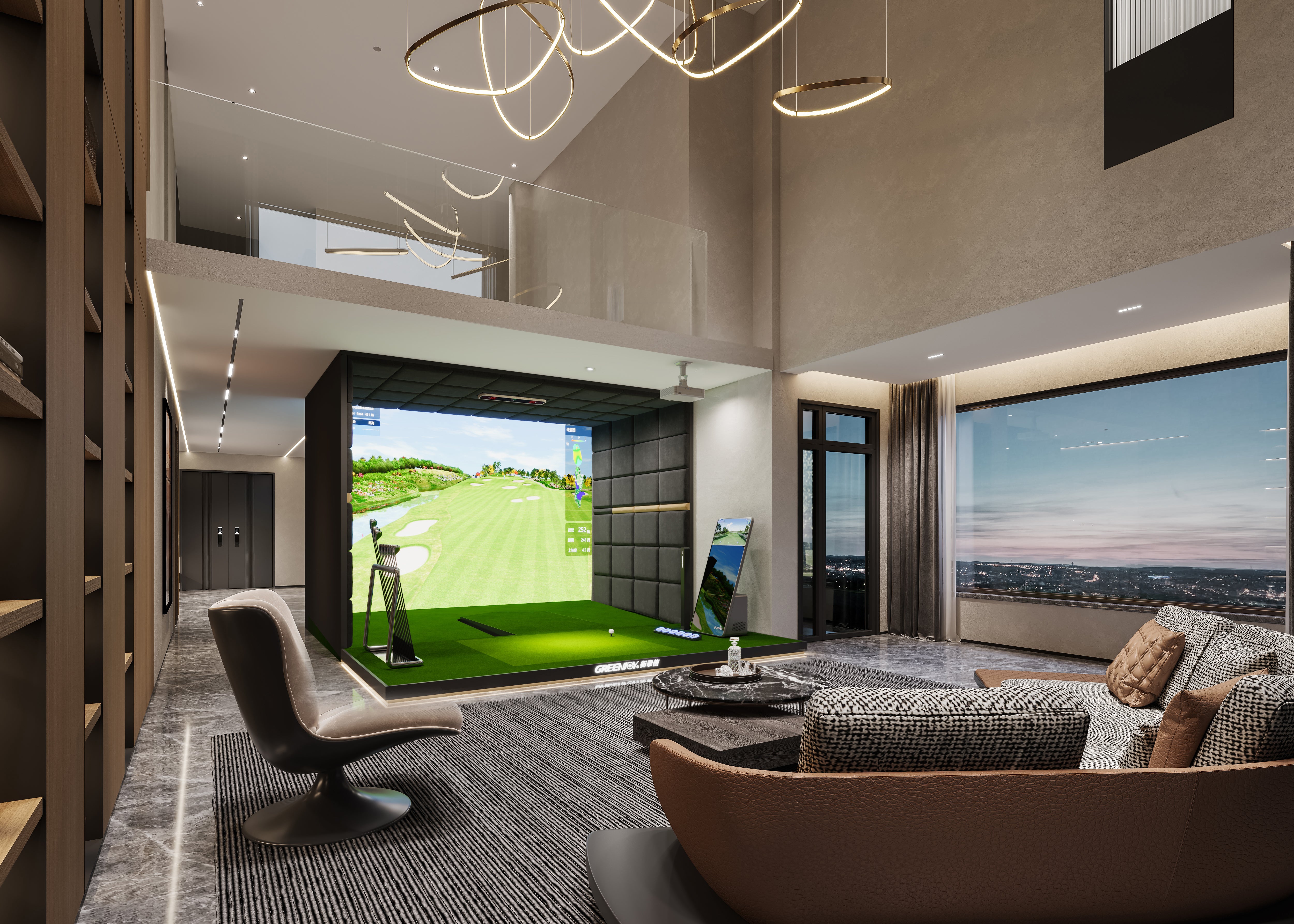
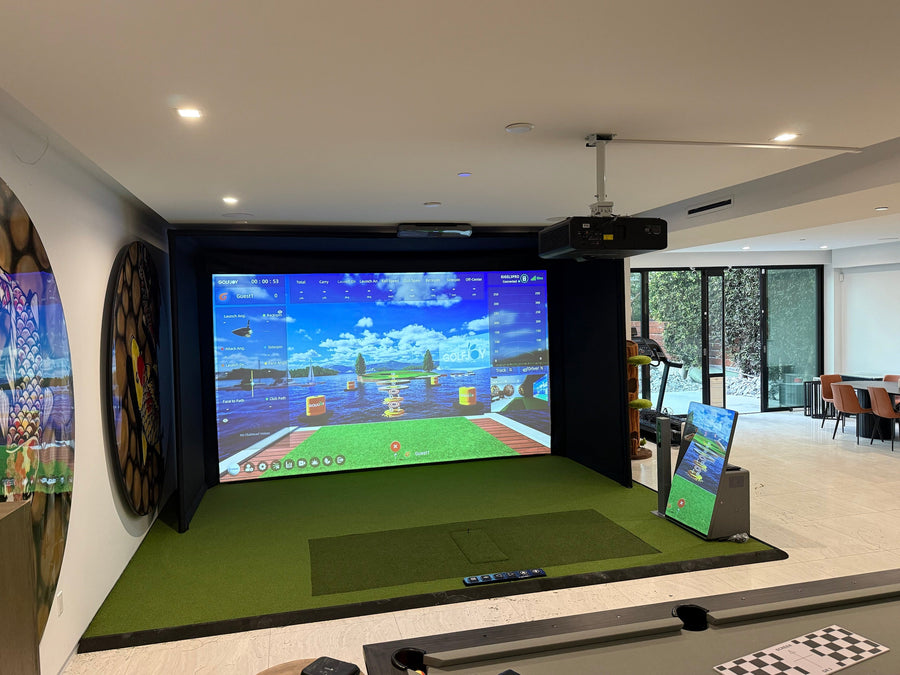
GOLFJOY personal simulator packages are designed as all-in-one solutions, combining hardware and software into a streamlined setup:
P7 — powered by GDS Pro (dual-camera system, comprehensive data tracking)
P8 — powered by Spica 3 (triple-camera system with integrated display and advanced analytics)
These systems are designed to deliver professional-level performance in a home environment, without the complexity of custom installation.
(Exact requirements may vary depending on configuration and region.)

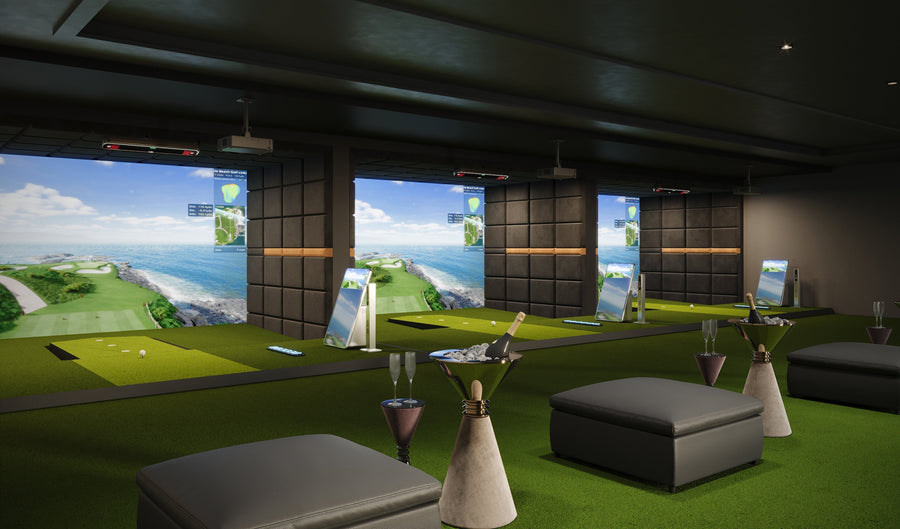
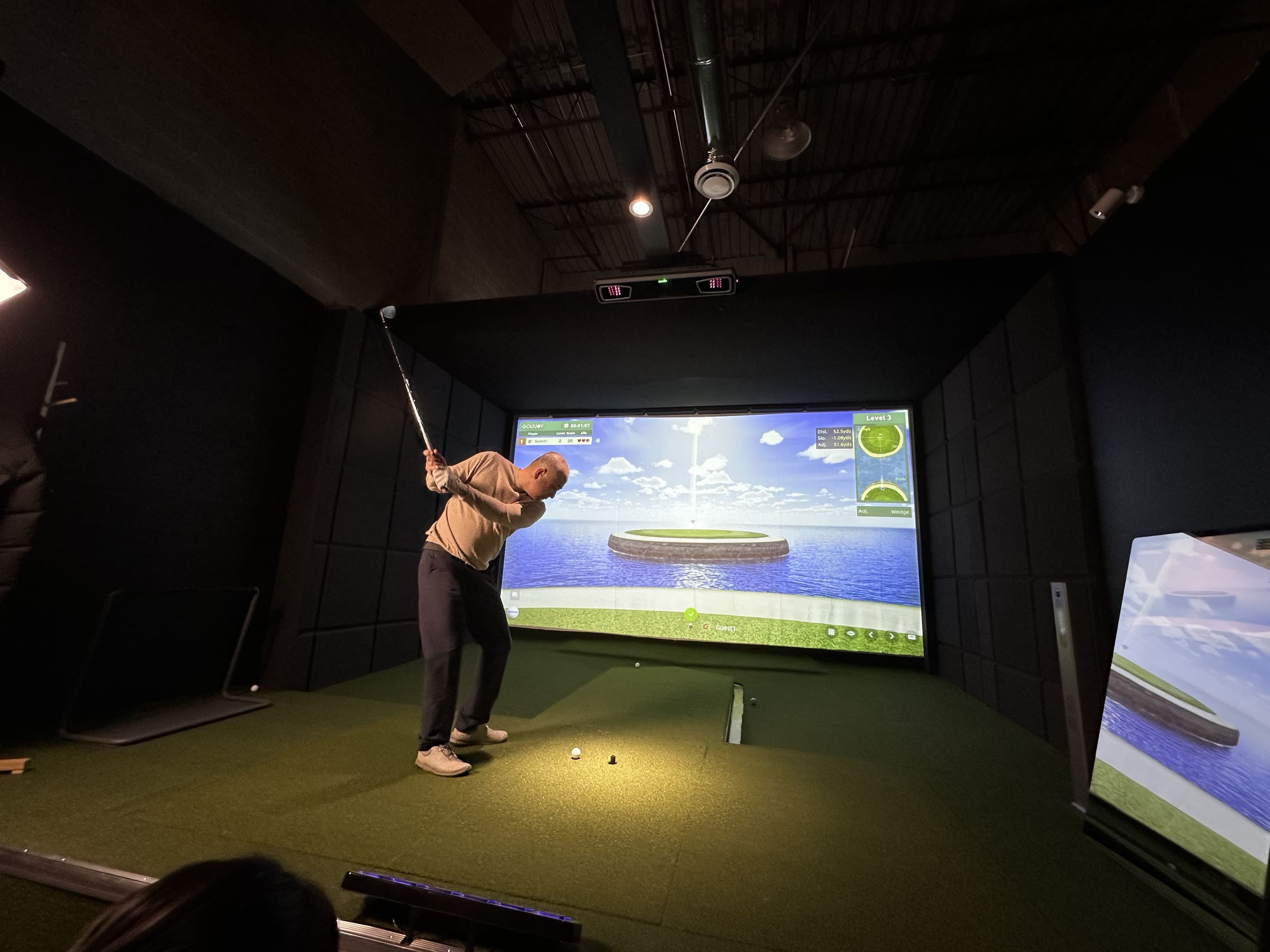
Commercial environments use overhead-mounted launch monitors, designed for:
GOLFJOY’s Rigel series enables scalable simulator setups, from single-bay studios to multi-bay commercial venues.
Indoor golf simulators are widely used in:
Revenue is typically generated through:
With consistent usage and strong location strategy, simulator setups can become revenue-generating assets, with scalable return potential over time.
Durability
GOLFJOY impact screens are engineered for high-volume use, reducing replacement frequency and long-term maintenance costs.
Continuous Software Evolution
Ongoing updates improve physics, expand course libraries, and enhance system performance — meaning your simulator improves over time.
Open Ecosystem Compatibility
Compatible with leading platforms such as GSPro, E6 Connect, and Creative Golf — giving users flexibility without platform lock-in.
Operational Efficiency (Commercial)
Overhead systems track standard golf balls without markers or stickers, reducing consumables and simplifying daily operations.
For home users:
A complete simulator is not just a purchase — it’s a long-term training and entertainment system, combining data-driven practice with immersive gameplay.
For commercial operators:
A simulator setup is a scalable business asset, capable of generating recurring revenue across multiple use cases.
Every space, user, and business model is different.
GOLFJOY’s global team can help you determine the right configuration based on your goals and environment.
Submit your information and our team will follow up with you.